Sentricon® Always Active™ Termite Protection
Protect Your Home From Termites — 24/7
Local & Family-Owned • No Binding Contracts • Free Returns • 100% Satisfaction Guaranteed
Smarter Termite Protection, Built Around Your Home
Local & Family-Owned • No Binding Contracts • Free Returns • 100% Satisfaction Guaranteed
24/7 Protection
No Drilling or Trenching
Targets the Colony
Professionally Monitored
How Sentricon® Works
Sentricon® takes a smarter approach to termite protection. Instead of simply creating a treated barrier around your home, the system uses strategically placed bait stations to target subterranean termite colonies at their source while providing continuous protection against future termite activity.
1. We Inspect Your Home
Every Sentricon® installation begins with a professional termite inspection. Our Certified Sentricon Specialists look for signs of current termite activity, potential entry points, moisture concerns, and other conditions that could make your home more vulnerable to termites.
2. We Create a Protective Perimeter
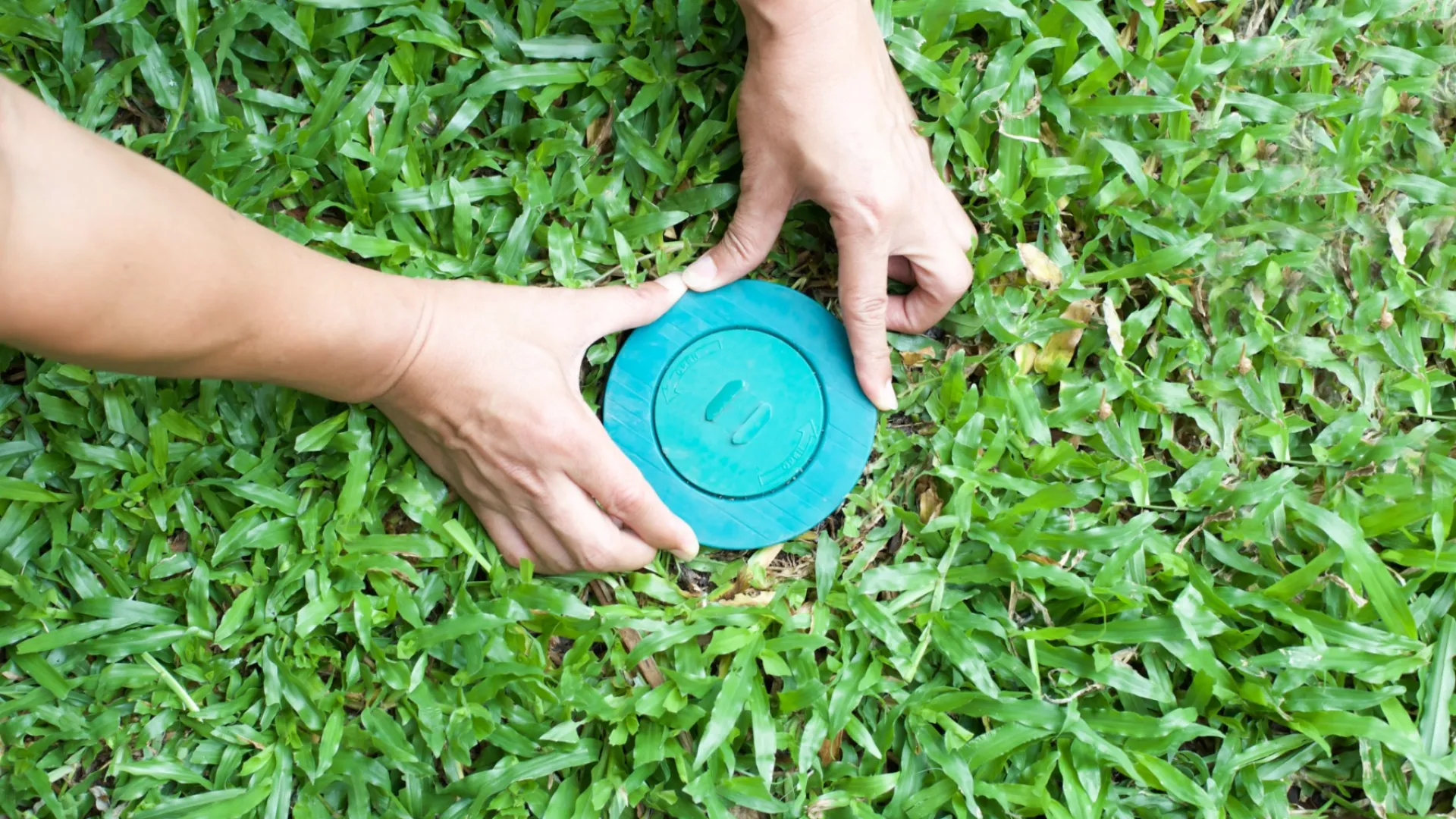
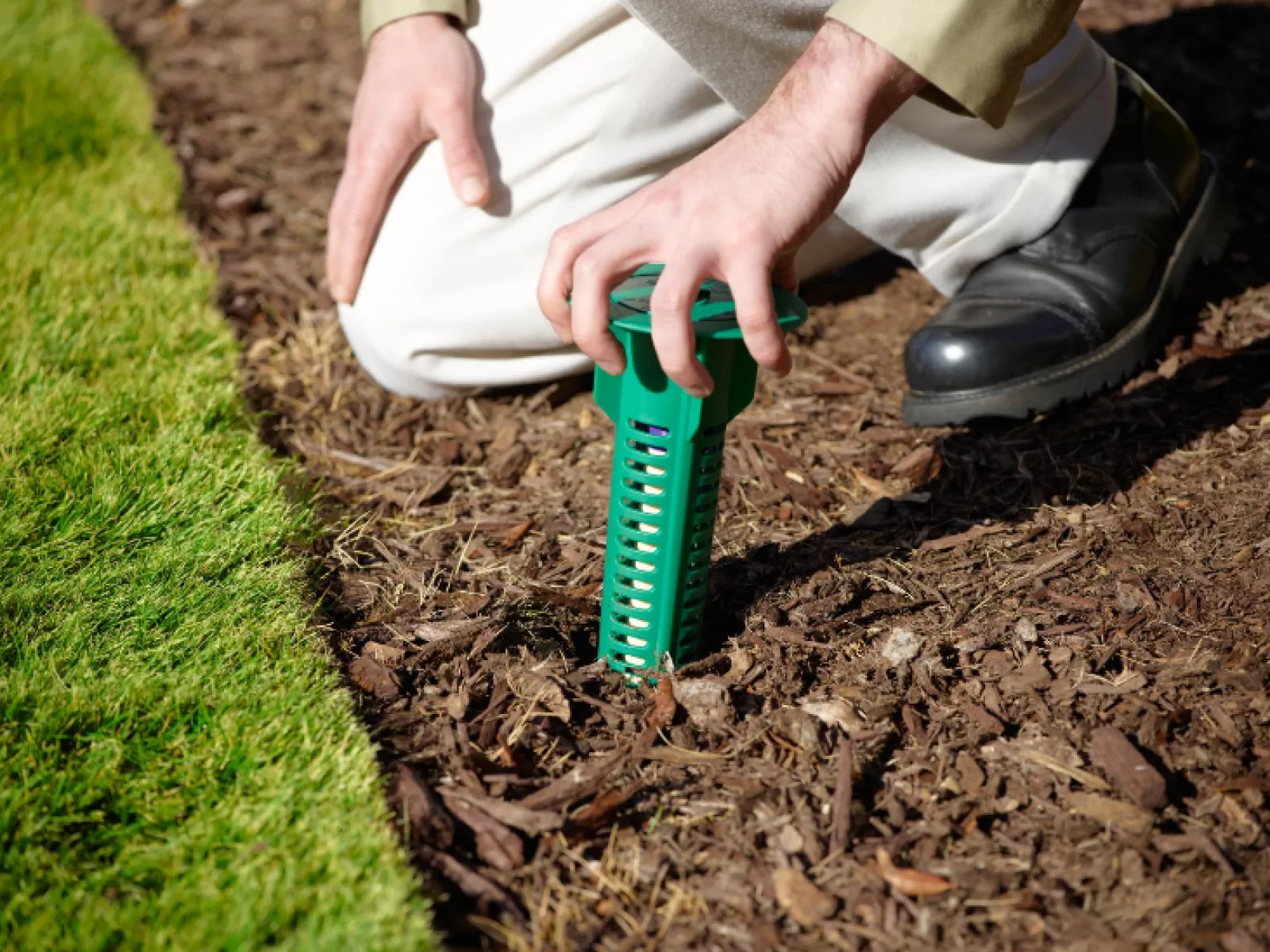
Sentricon® stations are strategically installed in the soil around the exterior of your home. Each station contains Recruit® HD termite bait and remains in place to provide continuous protection with minimal disruption to your property.
There's no need for extensive drilling, trenching, or applying hundreds of gallons of liquid treatment around your home.
3. Termites Find the Bait
Termites are constantly searching for new food sources. As they forage through the soil around your home, they encounter the Sentricon® stations and begin feeding on the bait.
The system doesn't attract termites to your property. Instead, it intercepts termites as they naturally forage for food.
4. The Colony Is Eliminated
Once termites begin feeding on Sentricon®, its active ingredient, noviflumuron, disrupts their ability to successfully molt and develop.
Because worker termites are essential to feeding and maintaining the colony, their gradual elimination creates a chain reaction. The colony can no longer sustain itself, ultimately resulting in total colony elimination, including the queen.
5. Protection Stays in Place
Eliminating an existing termite colony is only part of the job.
Sentricon® stations remain around your home after installation, providing continuous protection against future subterranean termite colonies that may approach your property.
Kingfish periodically inspects and services the system annually to make sure your home remains protected year after year.
Always Active™ means exactly that. Termite protection that's always on.
Why Termite Protection Matters
Your home is likely one of your biggest investments. In Florida, protecting it from termites should be part of routine home maintenance, not something you wait to address after damage appears.
Termites Can Work Undetected
Termites are often called a "silent" threat for good reason. Subterranean termites travel through the soil and can enter a home through small cracks, expansion joints, plumbing penetrations, and other hidden access points. Because much of their activity occurs behind walls, beneath flooring, or inside structural wood, an infestation can go unnoticed for an extended period of time.
For many homeowners, the first obvious sign of a termite problem is a swarm, visible mud tubes, or damage that has already occurred.
Florida Homes Face Year-Round Termite Pressure
Florida's warm, humid environment provides ideal conditions for termite activity. Termites are a natural part of our environment, which means the goal isn't to make termites disappear from your property. It's to prevent termite colonies from establishing themselves in your home.
Moisture around foundations, landscaping, mulch, wood-to-ground contact, irrigation, and other common conditions around Florida homes can also create an environment favorable to subterranean termites.
Homeowners Insurance Typically Doesn't Cover Termite Damage
One of the most important things homeowners should understand is that standard homeowners insurance generally does not cover damage caused by termites.
That means the cost of repairing damaged framing, flooring, walls, trim, or other structural components could fall entirely on the homeowner.
Preventative termite protection helps reduce that risk by addressing termite activity before it becomes a costly repair.
Prevention Is Easier Than Repair
Waiting until termites are discovered means they may have already been feeding on the home.
Professional termite protection provides another layer of defense by continuously monitoring and protecting the structure, rather than relying on visible signs of an infestation.
With the Sentricon® Always Active™ system, protection remains in place around your home 24/7, helping eliminate subterranean termite colonies that threaten your property and providing ongoing protection against future colonies.
When it comes to termites, the best time to protect your home is before you know you have a problem.
Frequently Asked Questions
Q How do I know if I have termites?
Common signs include termite swarmers, discarded wings near windows or doors, mud tubes along the foundation, damaged or hollow-sounding wood, and bubbling or damaged paint. However, termites often remain hidden, so an inspection is the best way to determine whether activity is present.
Q Can I have termites even if I don't see any signs?
Yes. Subterranean termites spend most of their time underground or inside wood, which means an infestation can exist without obvious signs. This is one of the reasons preventative termite protection is so important in Florida.
Q How often should my home be inspected for termites?
Florida homeowners should have their homes professionally inspected for termites at least once a year. Regular inspections can help identify activity or conditions that may make your home more susceptible to termites.
Q Are termites common in Florida?
Yes. Florida's warm temperatures, humidity, rainfall, and long termite season create ideal conditions for termite activity. Homes throughout Northeast Florida face termite pressure, regardless of their age or construction type.
Q Can a newer home get termites?
Absolutely. Termites aren't limited to older homes. New construction can also experience termite activity, especially when conducive conditions such as moisture, landscaping, mulch, or wood-to-soil contact are present around the structure.
Q How much damage can termites cause?
Termites feed on cellulose materials, including the wood used to construct your home. If activity goes unnoticed, they can damage framing, flooring, trim, walls, and other wooden components. The extent and cost of repairs depend on how long the colony has been active and where the damage occurs.
Q Do termites only attack wood homes?
No. Concrete block, brick, and stucco homes can still experience termite problems. Termites can travel through small openings and construction joints to reach wooden framing, roof components, trim, flooring, cabinets, and other cellulose materials inside the structure.
Q What attracts termites to a home?
Moisture is one of the biggest contributing factors. Leaking plumbing, poor drainage, excessive irrigation, wood-to-soil contact, mulch against the foundation, tree stumps, and other cellulose materials near the home can create favorable conditions for termites.
Q Do I own the Sentricon® stations installed around my home?
Q What should I do if I see termites or a termite swarm?
Don't panic or immediately spray the area. If possible, take a photo or save a few insects for identification and contact a licensed termite professional. Correctly identifying the termite species and locating the activity helps determine the appropriate treatment.
Q What's the difference between flying ants and termite swarmers?
They can look very similar. Termite swarmers generally have straight antennae, a broad waist, and two pairs of wings that are approximately equal in length. Flying ants typically have bent antennae, a narrow waist, and wings of different lengths. When in doubt, have them professionally identified.
Q Should I get termite protection even if I don't currently have termites?
Yes. Termite protection is primarily preventative. Because termites can remain hidden for extended periods, waiting until visible activity appears can mean damage has already occurred. Ongoing protection helps defend the home before a problem becomes obvious.
Certified Sentricon Specialists
Kingfish Pest Control is proud to be among a very small percentage of pest control operators in the U.S. chosen by the manufacturer to be Certified Sentricon Specialists. With Sentricon, you don't have to compromise between earth-friendly and effective.