
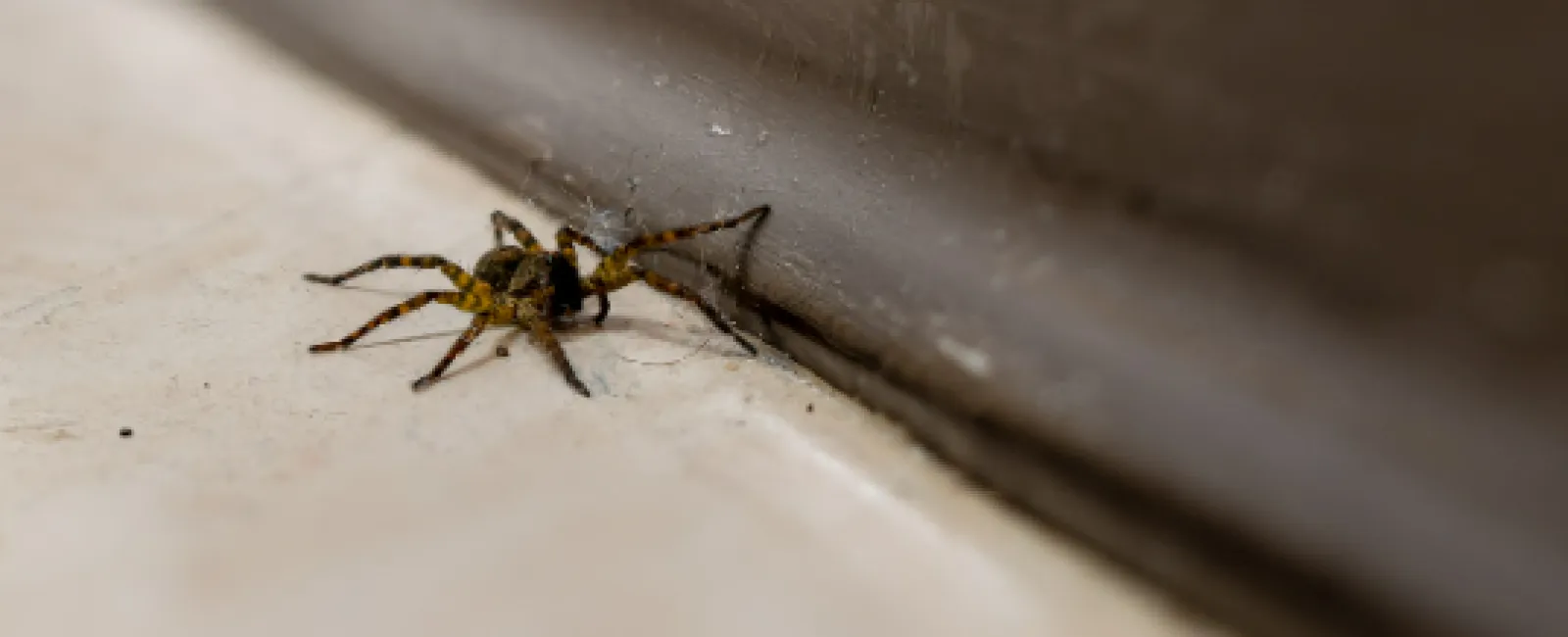
April - Spider Control - A Recent Job & Some Homeowner Tips
What We Walked Into
April is usually when we start getting more spider-related calls here in Northeast Florida. It's not always that there are suddenly more spiders — it's that people start noticing them more as they spend time around their homes.
One job this month came from a homeowner in the Riverside area. Older house, lots of character, but also plenty of small gaps and quiet corners where pests can settle in.
They told me it started in the garage. Webs showing up in the corners, then coming back a couple of days after being cleaned. Then they started seeing spiders inside — near windows, in the laundry room, and along the edges of a guest bedroom.
At that point, they just wanted to understand what was going on and get ahead of it.

The Problem
Once we walked through the property, it was clear this wasn't just one isolated spot.
There were webs along the garage ceiling, behind stored items, and around the exterior lights. Inside, smaller webs were forming in corners that don't get much traffic — behind doors, along baseboards, and near window frames.
With spiders, the main thing we look for is what's supporting them. In this case, there was a steady presence of small insects around the home, especially near the lighting outside and some slightly damp areas along the perimeter.
Spiders don't stick around without a reason. If there's food, they'll stay.
For the homeowner, it wasn't about one spider here or there. It was the pattern. Clean it up, and it's back again. That's what makes it frustrating.
The Process
We started outside, because that's where most spider issues begin.
We toured around the foundation, entry points, and along the eaves where webs were building up. I also focused on the areas around exterior lights, since those spots tend to attract insects at night.
Inside, We removed all visible webbing and treated common resting areas — corners, baseboards, and behind furniture edges where spiders tend to stay undisturbed.
At the same time,we pointed out a few conditions that were contributing to the problem. The garage had some clutter pushed against the walls, and there were a couple of small gaps around door seals and vents.
The goal wasn't just to remove what was there that day. It was to make the environment less inviting moving forward.
The Outcome
Within a few days, the difference was noticeable.
The webbing outside stopped building back up along the garage corners, patio edges, and around the light fixtures. Inside, the activity dropped off as well. The small webs that had been forming near windows and baseboards didn't return after being cleared and treated.
When we followed up, the homeowner mentioned the biggest change was not thinking about it anymore. Before, every time they walked into the garage or turned on a light at night, they were expecting to see movement or new webs. That kind of habit sticks with people when something keeps coming back.
Once the activity stopped, that constant checking went away. The space felt normal again, especially in areas like the garage and laundry room where they had been seeing the most activity.
During the follow-up visit, we checked all the previous problem areas — corners, ceiling edges, behind stored items, and around entry points. There were no new webs forming, and no signs of spider activity returning.
Once the exterior was handled properly and the inside was cleaned up and treated, everything stayed under control.
DIY Advice I Gave Them
Before we left, we gave them a few simple things they could stay on top of moving forward. None of it takes much time, but it helps keep spider activity from building back up.
We told them to knock down webs around doors, windows, corners, and along the garage as soon as they start to show up. Staying ahead of that early makes a big difference.
I also mentioned keeping garage and storage areas organized, especially along the walls where spiders tend to settle. Letting clutter build up in corners or behind bins creates the kind of quiet spaces they like.
We talked about outdoor lighting as well. Switching to softer or warmer lights can help reduce insect activity at night, which in turn helps reduce spiders.
They were advised to check window screens, door seals, and vents for small gaps that might allow insects inside. Inside the home, regular vacuuming around corners, baseboards, ceiling edges, and behind furniture helps keep things under control.
Keeping outdoor areas like patios and entryways clean also helps, since it limits how many insects are gathering close to the home.
They stayed consistent with these steps, especially around the garage and patio where the issue started. Along with the treatment, it helped keep the problem from coming back and made things much easier to manage over time.

Professional Insight
Spider issues usually tie back to something else.
In most Northeast Florida homes, it comes down to insect activity. If there's a steady food source, spiders will stay. Removing webs helps at the moment, but it doesn't solve the reason they're there.
That's why these problems tend to come back if they're only handled on the surface.
Sometimes the right approach is just identifying what's attracting them and addressing that first.
Closing
This job was a good reminder that spider issues don't usually come from one single spot. They build up over time and spread across different areas of the home.
If you're noticing webs coming back regularly or seeing more spiders than usual around your Northeast Florida home, it's worth paying attention early.
Small patterns usually mean something's building behind the scenes.
Exclusive Savings Offer:
Receive 10% OFF any new recurring pest control or rodent service for this month only. Mention "Kingfish Tales Discount" during purchase.
Kingfish Pest Control is a small company with a big heart. Our team monitors voicemails, emails, and texts outside normal business hours and will respond as quickly as possible. We recognize everyone has different demands on their time and ask that you respond when convenient.